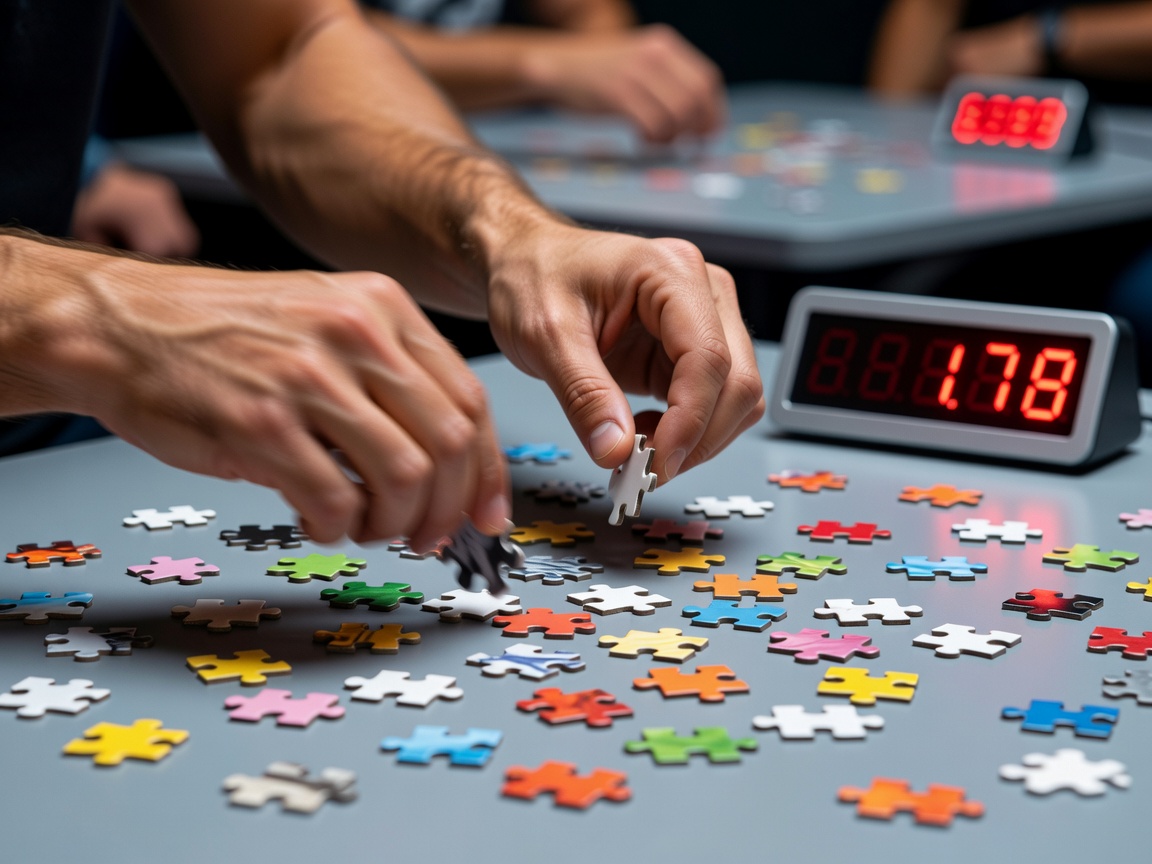
Know which rules you're training for
Competitive jigsaw solving has grown into an organised activity. The World Jigsaw Puzzle Federation runs a world championship that has been hosted in Valladolid, Spain, with individual, pairs and team categories, and national bodies such as the USA Jigsaw Puzzle Association hold their own championships. Piece counts, time limits, permitted aids and whether you see the box image are set by each organiser and can change between editions.
Everything on this page describes personal practice. It is not a summary of any official rulebook. Before an event, read that event's current rules and train with the same constraints.
It's also worth being honest about expectations: drills can make a process smoother and more consistent, but nobody can promise a particular time improvement. Treat your own logs as the only reliable measure.
Merge the flip and the first sort
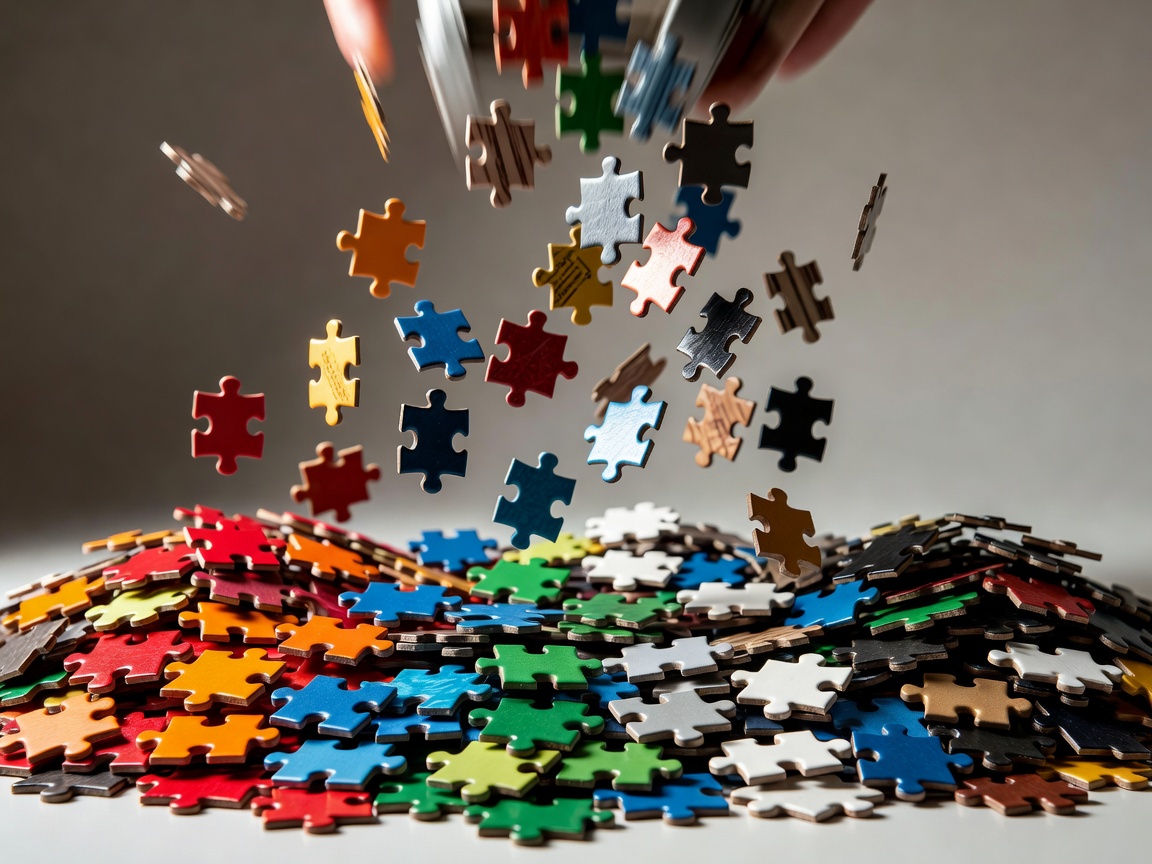
The first transition is from box to table. If you flip every piece and only then start sorting, you touch each piece twice. Many solvers combine both: flip, glance, and drop the piece into its rough group in a single motion. Edge pieces go to one side at the same time.
- Drill: flip one bag of 100 pieces into three groups, five times in a row.
- Keep group positions fixed so your hand learns the target.
- Record how often you change your mind about a piece's group.
Hand over from sorting to building early
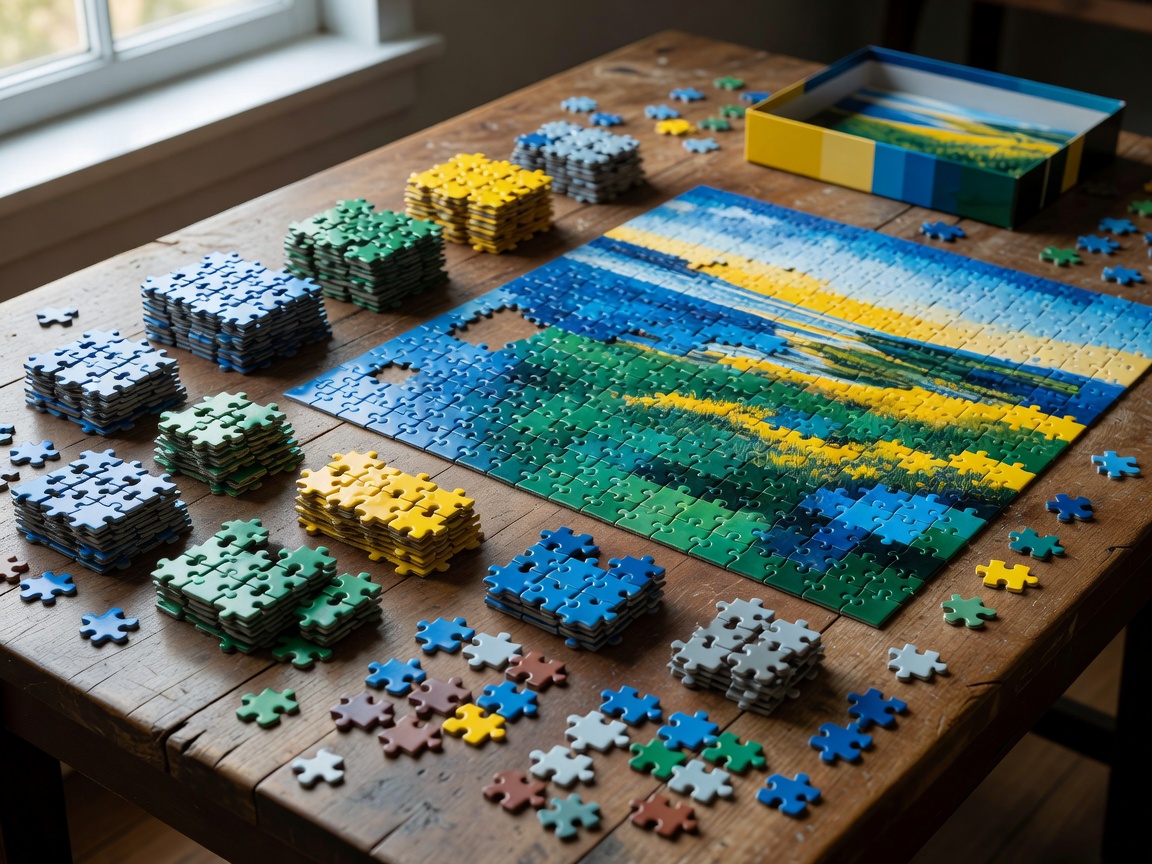
Over-sorting feels productive but delays the first connections. A useful habit is to start building the strongest zone as soon as its group is clearly complete, even while other groups are still rough. Early progress also gives your eyes reference points for the rest of the image.
Ask: "If I started building now, which zone would go fastest?" If the answer is obvious, start.
Carry information across sections
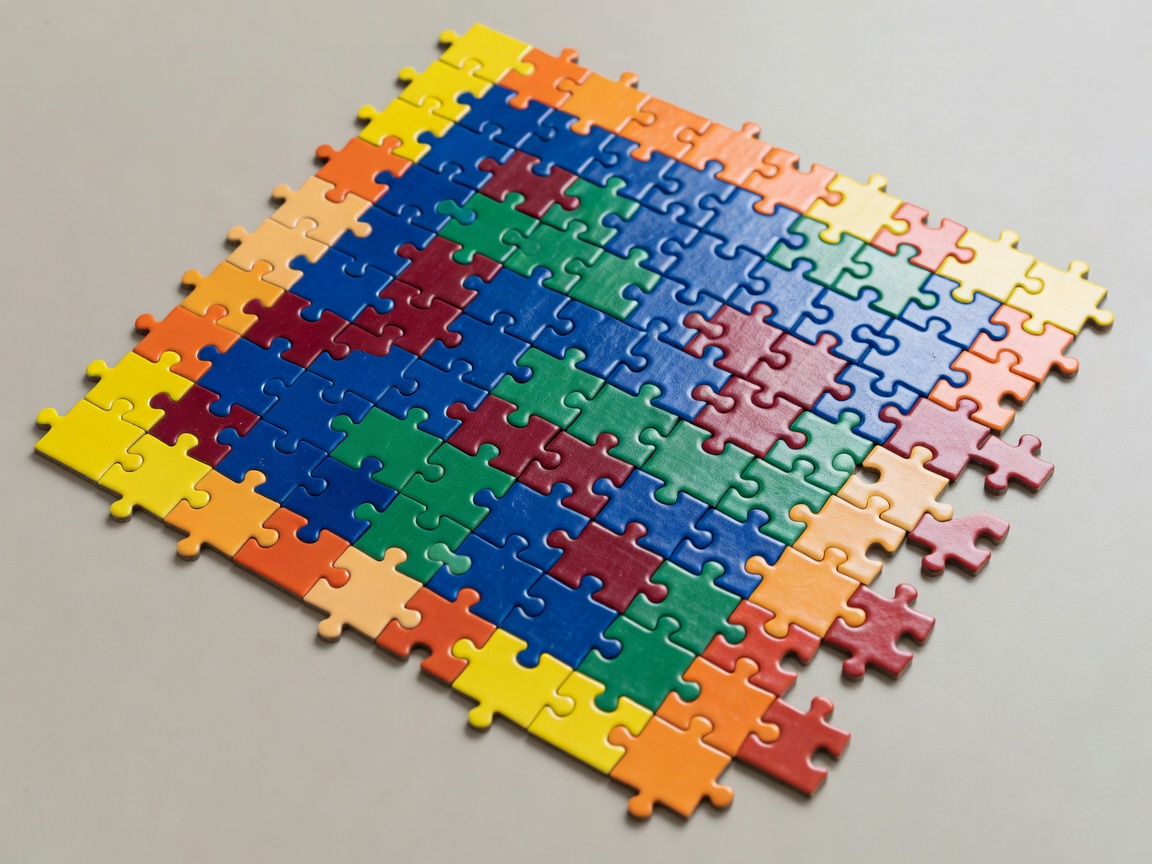
When a section is nearly done, spend a few seconds placing pieces that bridge to the next zone. You arrive at the next section already holding its edge. Without this, every new zone starts as a cold search.
- Drill: finish a section, then place only bridging pieces for 60 seconds.
- Build sections in their final position to avoid lifting and sliding.
- Choose the next zone by remaining pile size, not by habit.
Coordinate pairs and teams
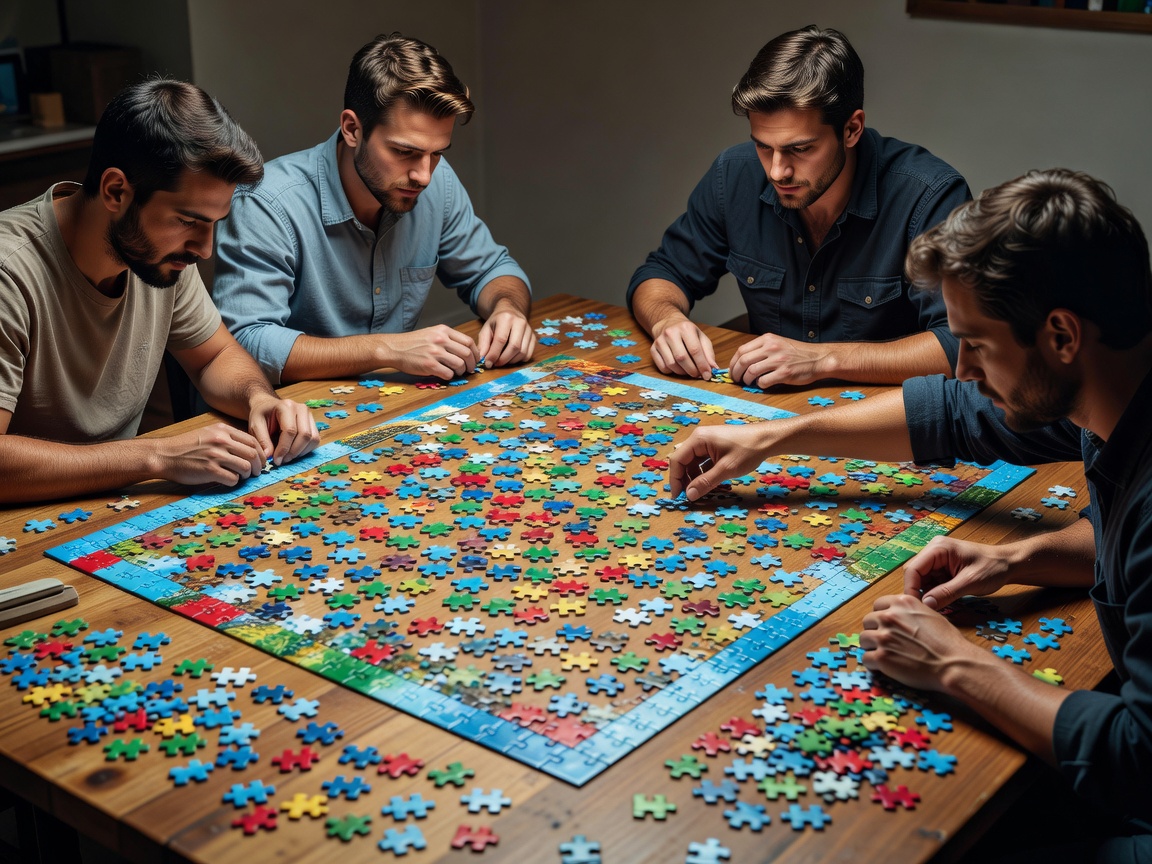
In pairs and team formats, transitions happen between people as well as between sections. Agree before the start who owns which zones, where the edge pile lives, and how you pass pieces. A quiet "yours" with a piece pushed to a fixed spot beats a running commentary.
| Format | Key transition | Practice focus |
|---|---|---|
| Individual | Sort to build | Combined flip-sort drill |
| Pairs | Zone ownership changes | Agreed passing spot |
| Teams | Merging corners | Pre-planned meeting lines |
Example practice log
A format suggestion, not performance evidence.
If your timed solves always stall in the same visual area, the issue may not be speed at all. See Difficult Patterns.