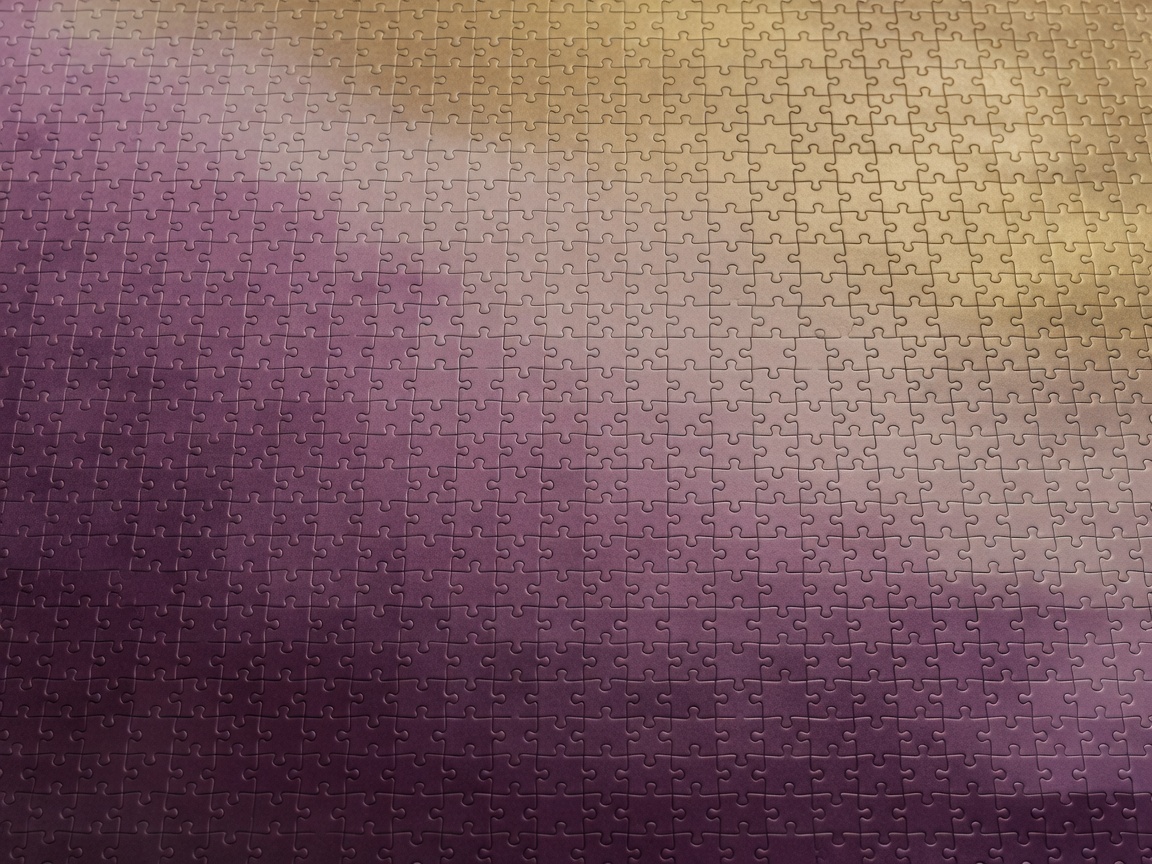
Classify before you search
Different hard fields fail in different ways, so they need different primary signals. Name the type first.
| Field type | Examples | Primary signal | Fallback signal |
|---|---|---|---|
| Gradient | Sunsets, colour-wheel gradient puzzles | Relative tone between neighbours | Shape rows |
| Single colour | Ravensburger Krypt series, all-white puzzles | Piece shape and cut row | Surface texture and sheen |
| Repeating print | M.C. Escher tessellations, patterned fabrics | Position within the repeat | Small print irregularities |
| Chaotic abstract | Springbok's Jackson Pollock "Convergence" | Dominant stroke direction | Shape matching |
| Irregular wooden cut | Liberty Puzzles, Stave Puzzles | Line continuity and whimsy outlines | Colour fragments |
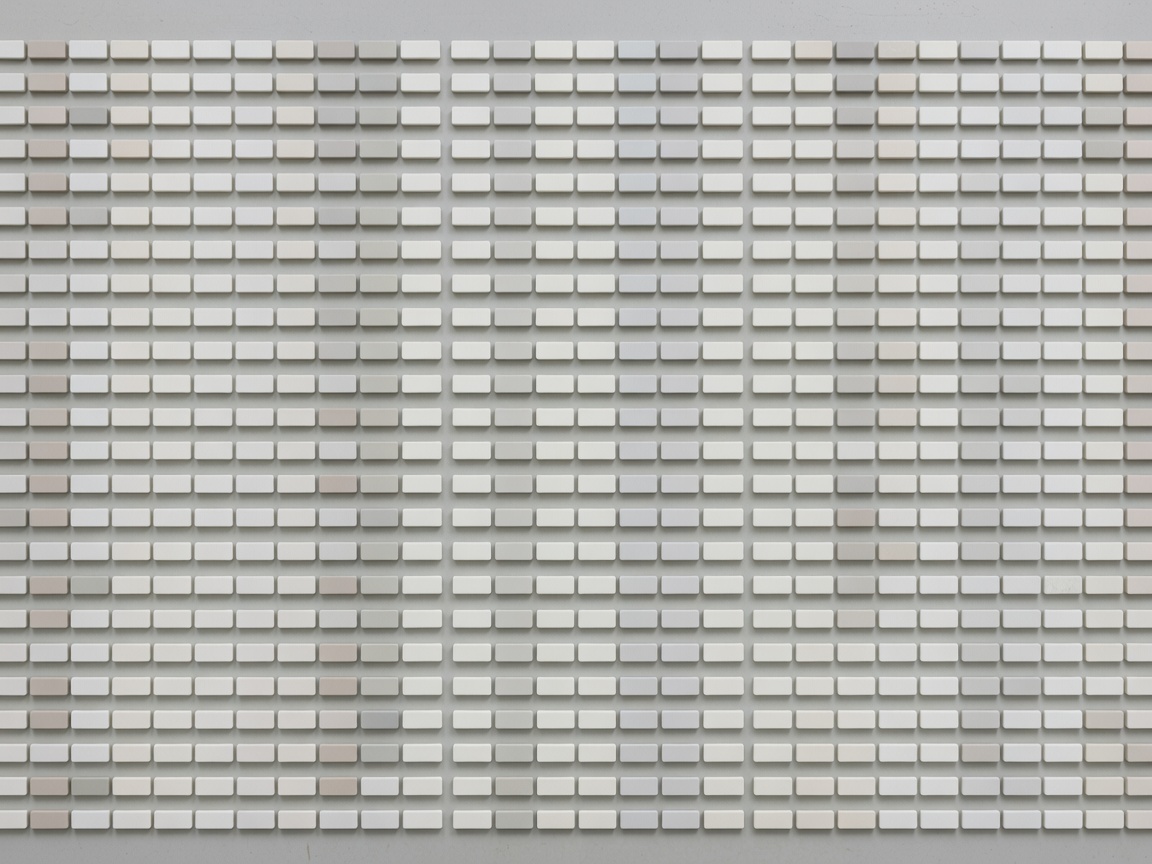
Gradients: rank, don't match
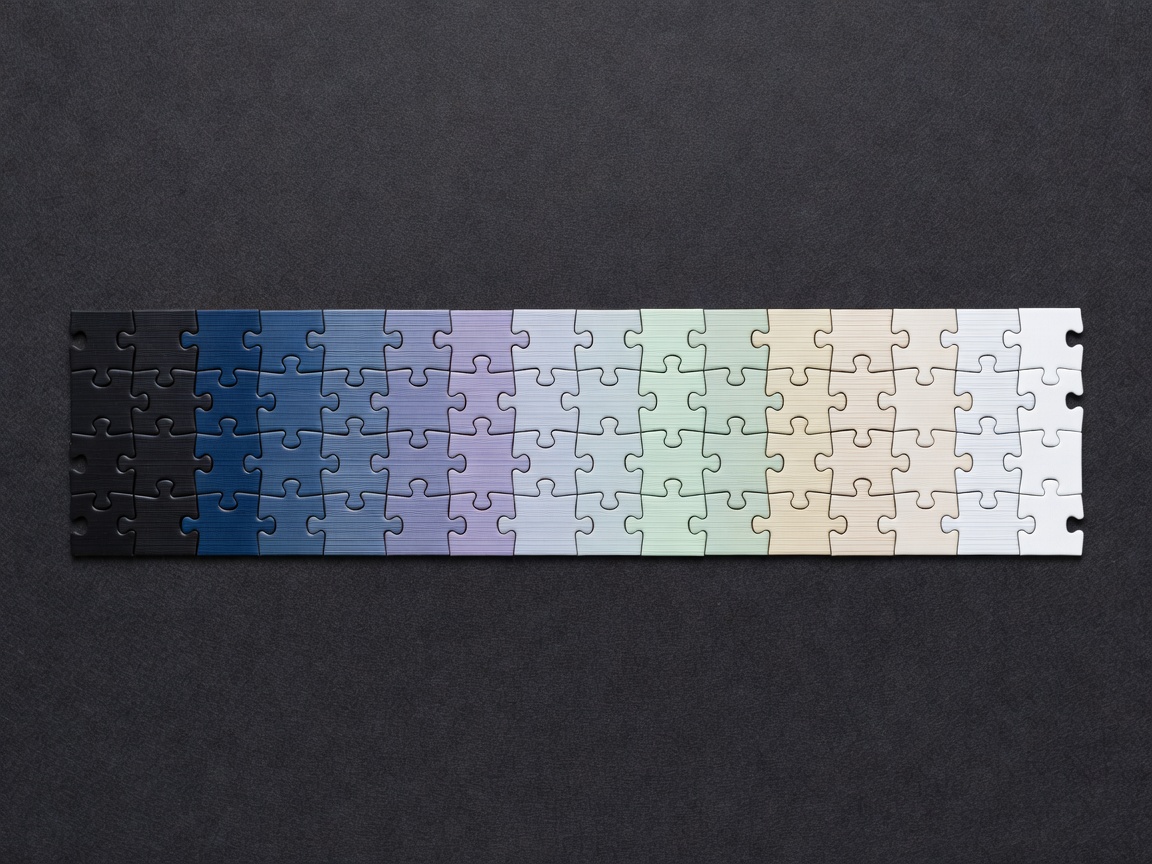
In a gradient, no single piece has a recognisable colour, but every piece is lighter or darker than its neighbours. Sort the field into a line from dark to light, then cut that line into bands. Each band corresponds to a strip of the image. Within a band, switch to shape.
- Judge tone in consistent light; a lamp at an angle can shift perceived colour.
- Compare pieces in pairs, never one piece against the box image.
- Accept rough bands; the fallback signal does the fine work.
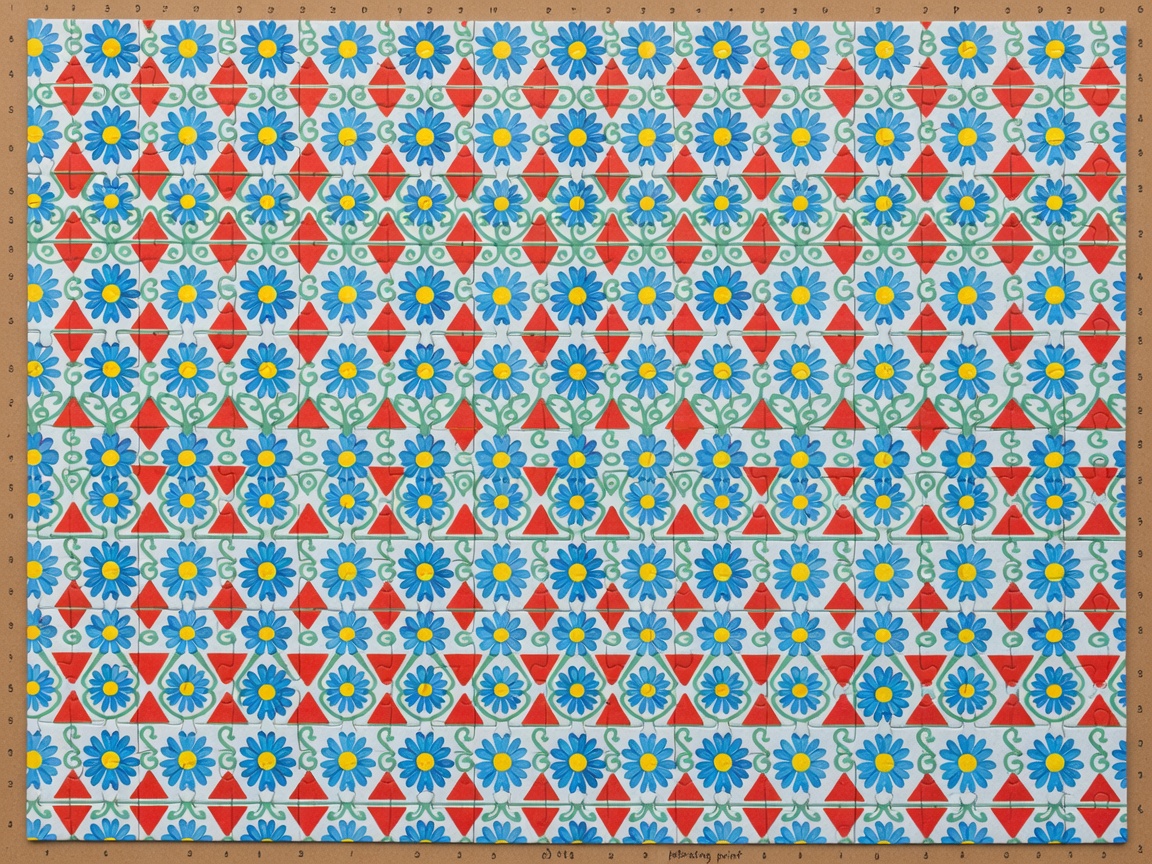
- Where the motif is cut: top, middle or bottom of the repeat.
- A small print irregularity that only occurs once.
- Grid cut rows: knob orientation is shared along the row.
Repeats and single colours: read position and shape
Repeating patterns lie to you, because the same motif appears many times. Instead of asking "what is on this piece?", ask "which part of the motif is on this piece?" Sort by position within the repeat, and look for tiny irregularities that break the pattern: a printing variation, a shadow, a highlight.
For single-colour puzzles, shape becomes everything. On grid cuts, pieces in the same row share knob orientation; on Ravensburger's Krypt puzzles the intended solving direction is a spiral from the outside in, which narrows each step. Lay candidates out in shape rows and read the gaps as shapes too.
Irregular wooden cuts: follow lines, not shapes
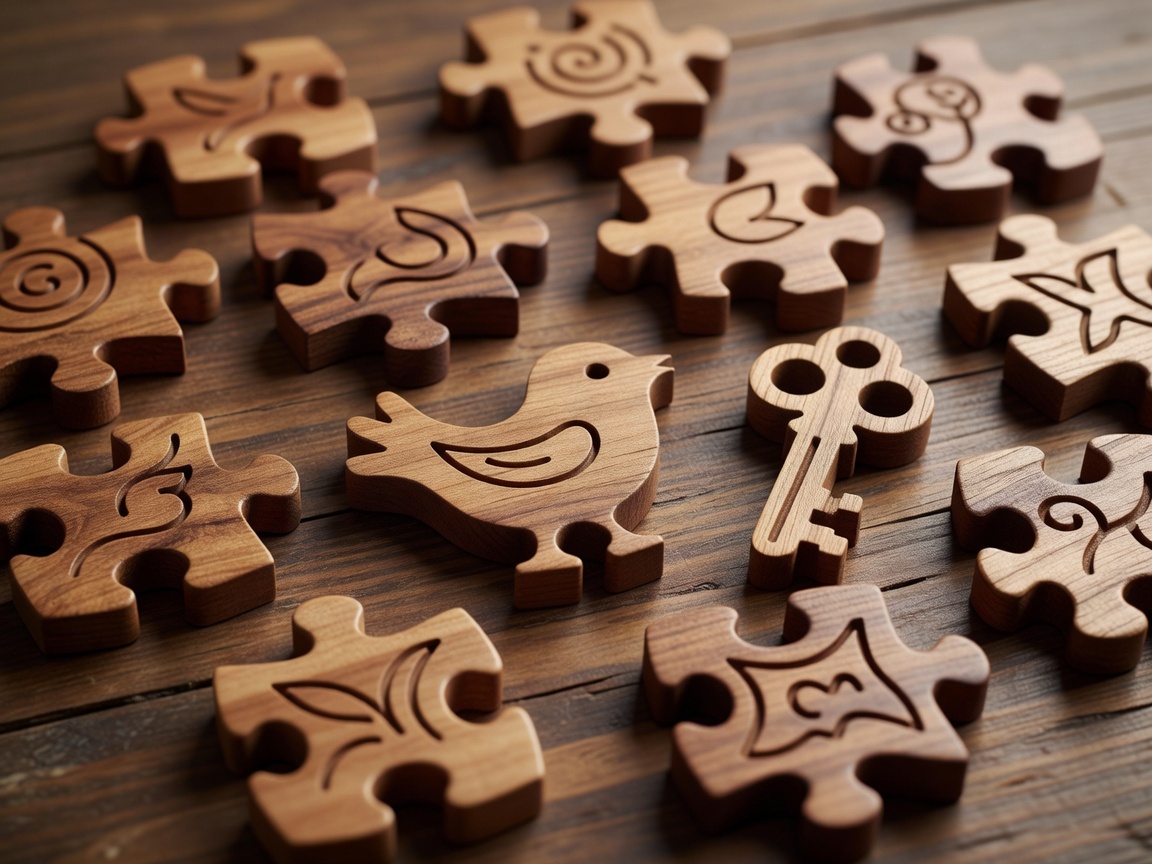
Hand-cut and laser-cut wooden puzzles, such as those by Liberty Puzzles in Colorado or Stave Puzzles in Vermont, often abandon the grid. Pieces may follow colour lines, include figurative "whimsy" pieces, and in some designs have false edges or several valid-looking solutions. Standard shape sorting breaks down.
Here the primary signal is continuity: a painted line, an outline or the edge of a colour block that must continue across the next piece. Whimsy pieces are anchors, because they are unique and usually easy to locate in the image.
- Place whimsies early as fixed reference points.
- Trace a single image line across the whole puzzle.
- Expect deliberate traps; verify fits by image, not by snugness alone.
A routine for any hard field
- Name the field type.
- Choose one primary signal and commit to it.
- Choose a fallback signal for when the primary stops helping.
- Lay pieces out so the signal is visible at a glance.
- Only then begin test fitting, and keep fits light.
Example practice log
Illustrative note format, not a performance record.
For the general sorting method that feeds into these fields, see the Jigsaw Method.