Clarifying practice and competition questions
Short, direct answers to the questions solvers ask most. Where an answer depends on an event's rules, we say so; we never stand in for an official rulebook.
Competition details
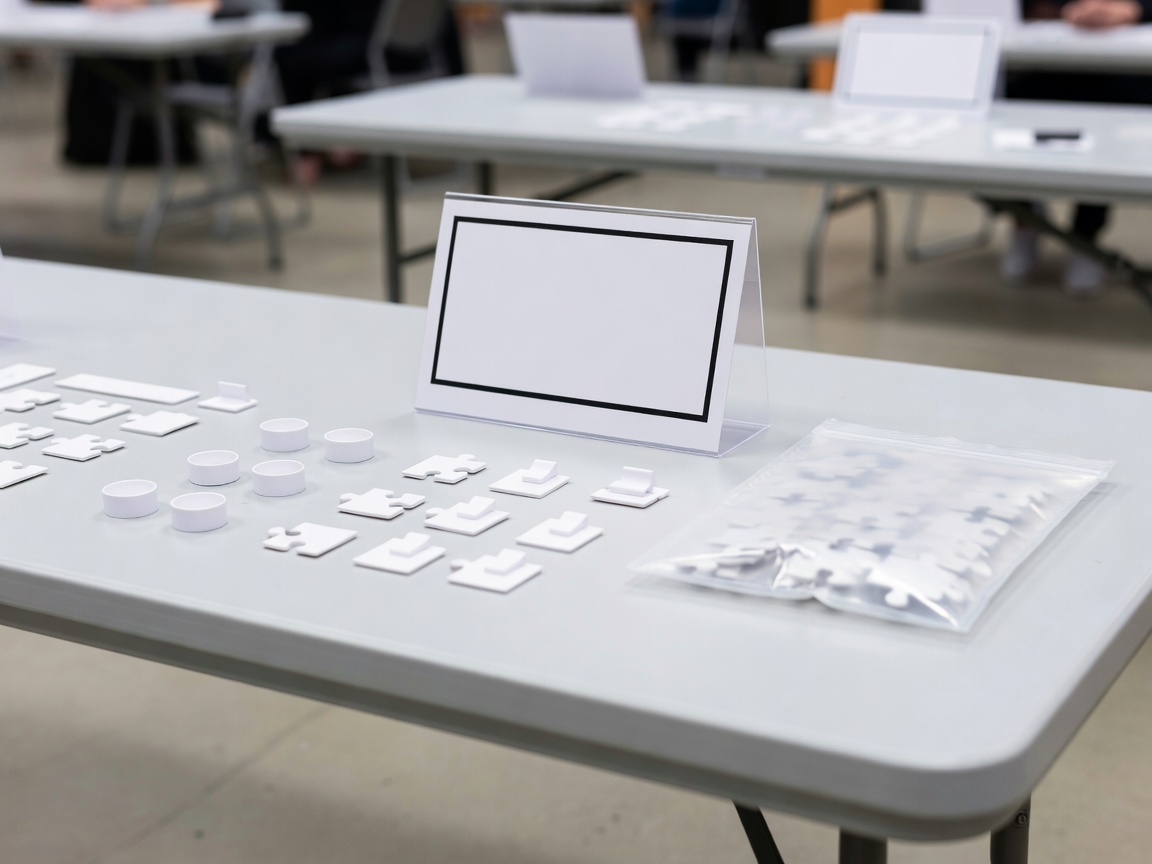
Can I use sorting trays in a competition?
It depends on the event. Some organisers allow personal trays or boards, others restrict sorting aids or provide standard equipment. Always check the current rulebook of the event you're entering.
Where do I find official competition rules?
From the organiser directly: for example the World Jigsaw Puzzle Federation for its world championship, or your national association such as the USA Jigsaw Puzzle Association. Rules can change between editions, so check close to the date.
Are 3D puzzles part of jigsaw competitions?
Mainstream jigsaw championships focus on flat puzzles. 3D building is mostly a personal and hobby discipline, which is why our 3D Assembly guide treats it separately.
Method and practice
Should I always build the edge first?
No. Edge-first is a sound default, but when the border is plain it can be faster to collect edges during the flip and place them as neighbouring zones are built. See the frame decision.
What is the difference between a grid cut and a random cut?
Grid-cut pieces sit in regular rows and columns with consistent shapes, so shape sorting is reliable. Random-cut pieces vary freely, so colour and line continuity matter more.
How often should I practise under a timer?
Mix both. Timed sessions reveal where you stall; untimed drills let you fix that specific stage without pressure. A short note after each session helps you spot patterns.
Which puzzles should I use for practice?
Mostly puzzles similar in piece count and style to your target event, plus deliberately difficult ones (gradients, single colours) to train specific bottlenecks.
How do I start with a single-colour puzzle?
Switch to shape as the primary signal. Lay pieces out in rows by shape and read each gap in the puzzle as a required shape. Our Difficult Patterns guide covers this in detail.
Can these techniques guarantee faster times?
No. They can make your process more consistent and help you understand your bottlenecks, but results vary by solver and puzzle. Your own practice logs are the best measure of progress.
Didn't find your question? Compare notes with the editorial desk.